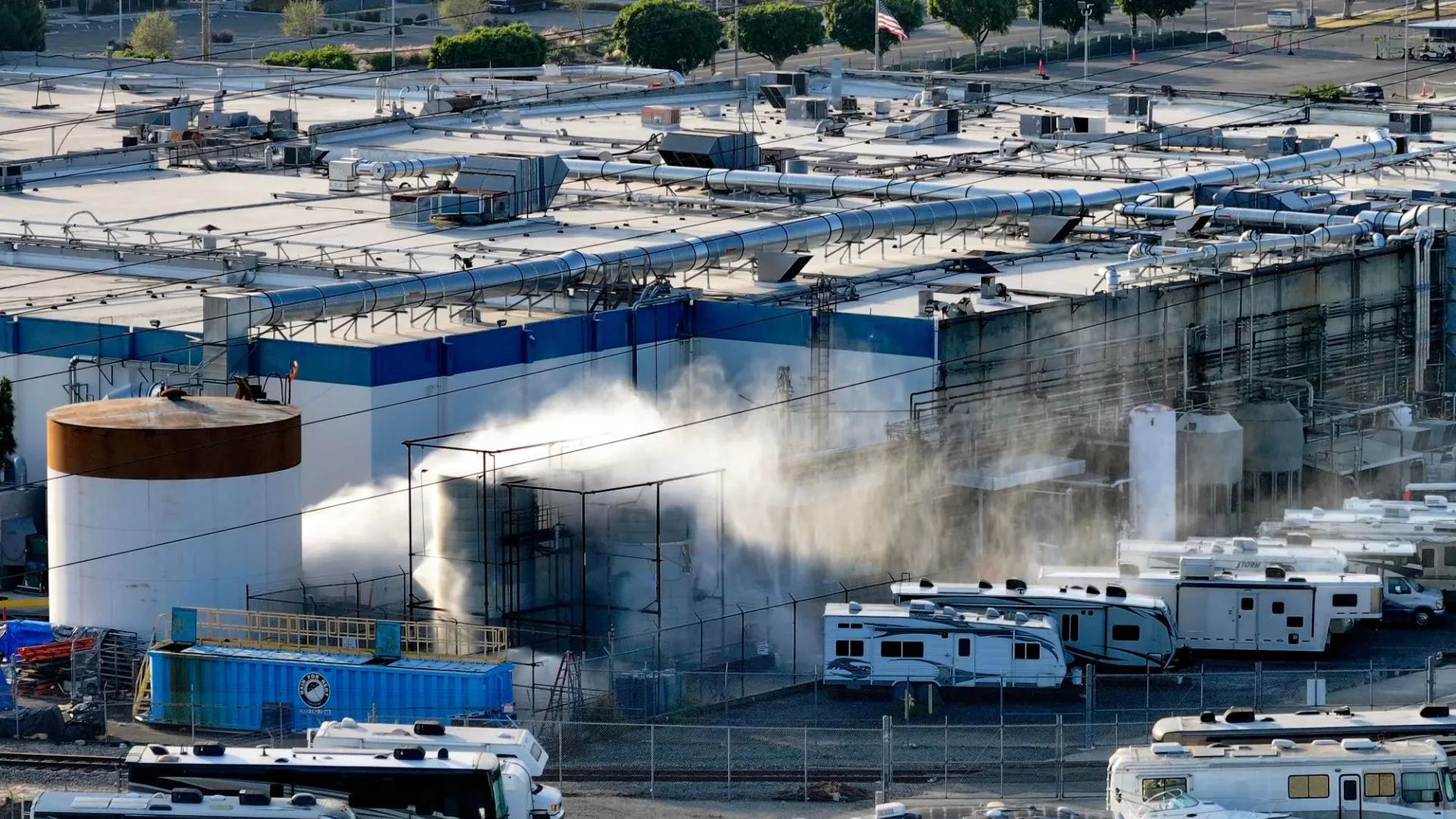
In May 2026, a 7,000-gallon tank of methyl methacrylate (MMA) at GKN Aerospace’s Garden Grove, California facility began overheating and off-gassing. Evacuation orders followed for roughly 50,000 residents across multiple Orange County cities, including Garden Grove, Stanton, and Cypress. EPA and FEMA resources were mobilized. Three days passed before the situation was fully controlled and residents were allowed to return, and the cause was a faulty valve.
MMA is a flammable, volatile monomer used in aerospace composites, adhesives, and coatings manufacturing. When it heats above its inhibitor threshold, it produces toxic vapor and carries a real risk of runaway polymerization, an exothermic reaction that’s difficult to interrupt once it starts. The moment the tank exceeded safe parameters, professional hazmat teams with specialized equipment and chemical expertise were the only viable response. GKN Aerospace operates under rigorous environmental health and safety standards, and the incident happened anyway.
What Escalates a Chemical Incident
Most industrial chemical emergencies don’t start as emergencies. They start as ordinary maintenance problems—a gauge reading, an unexpected temperature, a valve that won’t seat. The window between “we have a situation” and “this requires evacuation-level response” can close faster than a contractor can be sourced, briefed, and mobilized.
Several factors pushed the Garden Grove incident from a site-level problem to a regional event. The tank volume meant a large amount of material was at risk. MMA vapor is heavier than air and spreads at grade level into surrounding neighborhoods. And once a hazmat incident reaches the public notification threshold under California’s Risk Management Program (RMP), the response stops being internal and involves local fire, county hazmat, state agencies, and federal oversight.
For facility managers, the Garden Grove incident points to a specific gap in most emergency response plans. Most industrial operations have some quantity of hazardous material on site. The planning gap is between what an internal team can handle and what requires a pre-qualified outside contractor.
Pre-Qualifying a Response Contractor Before You Need One
Emergency response contractors work best when they know your facility before an incident. That means your chemical inventory, your site layout, access points, water supply for foam application if needed, and what materials are stored where. A contractor learning this information during an active event at 2 a.m. with vapor readings rising adds time and risk to a situation that’s already compressed.
Pre-qualification isn’t complicated. It’s a site walk, a review of your chemical manifest, and an agreement that establishes response protocols and contact escalation. Under OSHA 29 CFR 1910.120 (HAZWOPER), facilities with hazardous substances above certain thresholds are required to have an Emergency Response Plan, which should name the contractor and include their 24/7 contact.
The Garden Grove incident involved a material that many Southern California aerospace and manufacturing facilities keep on hand. If your facility uses MMA, styrene, acrylic monomers, or similarly reactive organic compounds, your emergency plan should reflect the specific response requirements those materials create.
Regulatory Exposure After an Incident
Chemical spill events that affect surrounding communities trigger a reporting cascade under California and federal law. Under the Emergency Planning and Community Right-to-Know Act (EPCRA), facilities that release a reportable quantity of a hazardous substance must notify the National Response Center immediately. California’s Unified Program requires notification to the local Certified Unified Program Agency (CUPA). In Orange County, that’s the Orange County Fire Authority.
Incident response documentation matters at every step. Which contractor responded, what actions they took, what waste was generated and how it was manifested, all of it becomes part of the post-incident regulatory record. Facilities that use permitted, EPA-registered contractors with proper manifest tracking are in a substantially better position during agency review than those who coordinated a response on the fly.
Before the Next Incident
Review your facility’s chemical inventory against your current Emergency Response Plan. Confirm that your named contractor is still operational and that contact information is current. If you’ve added chemicals or changed quantities since the plan was last updated, update it.
If you’re in the aerospace, defense, or advanced manufacturing sector in Southern California, Texas, or Kansas City and you don’t have a pre-established relationship with a permitted hazmat emergency response contractor, establish one before an incident forces the issue. Hazmat Waste Disposal provides 24/7 emergency hazmat spill response and EPA-compliant waste management across all three markets. We can conduct a pre-incident site review at no obligation. Request service or ask a question here.
Source: NPR, California chemical tank emergency, May 2026
Tags